Redditor Reveals How Engineers Made Use of "Chicken Gun" to Fire Bird Carcasses at Aircraft Components Just to Test Plane Safety

Bird-strike testing sounds strange until you realize how much is riding on it. In aviation, a compressed-air device nicknamed the "chicken gun" has long been used to fire bird carcasses at aircraft parts to see what holds up and what fails.
The story behind it is a mix of old-school engineering, practical safety testing, and a name that makes the whole thing sound even more absurd. From jet engines to windshields, the goal has always been the same, find out how planes handle a hit before passengers ever do.
And once Reddit got hold of the chicken gun story, the comments took off pretty fast.
Redditor u/Urisk has shared an interesting piece of information with the TodayILearned subreddit community
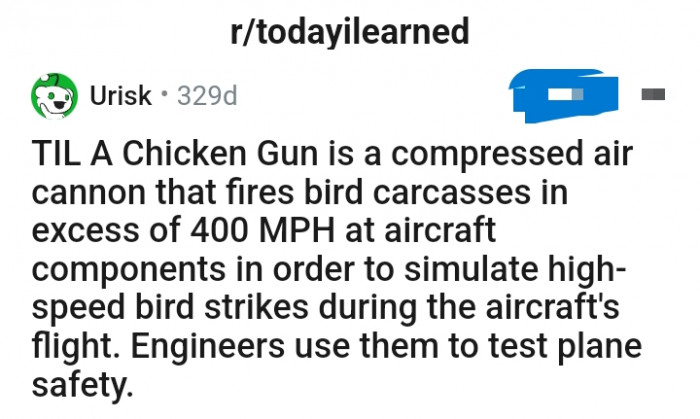
A Chicken Gun is a compressed air cannon that fires bird carcasses
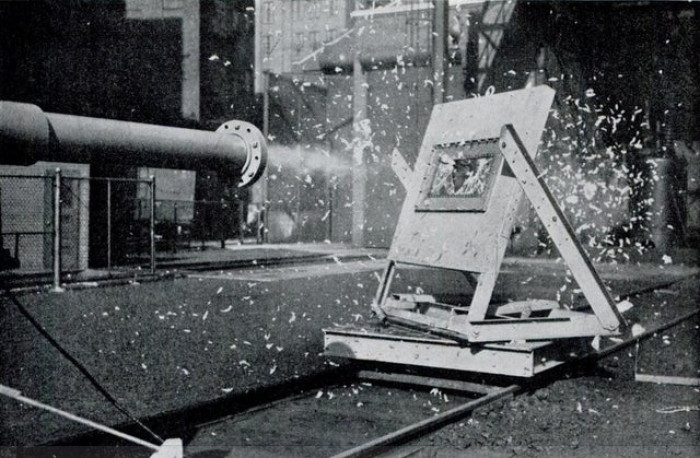
There, it was used to test parts for several commercial aircraft manufacturers before being retired sometime in 1947. The De Havilland Aircraft Company in the United Kingdom independently created a similar gun in the mid-1950s.
Here is what Redditors had to say:
World War 3 and World War 4

The use of the "chicken gun" in aviation safety testing highlights a significant commitment to ensuring the resilience of aircraft components against real-world impacts. By simulating high-speed bird strikes, engineers are able to rigorously assess critical parts such as jet engines and windshields. This innovative approach not only prioritizes passenger safety but also embodies the ethical responsibility of the aviation industry to develop and implement effective safety protocols.
As advancements in technology continue, the reliance on such testing methods will remain essential in addressing the challenges posed by wildlife encounters in flight. The implications of these tests extend beyond compliance; they reflect a proactive stance in safeguarding lives and enhancing the overall integrity of aircraft design.
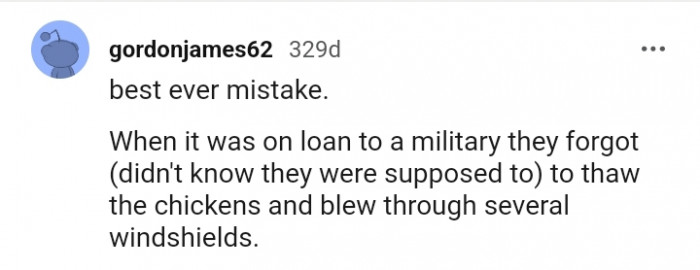
Thawing the Chickens
The Royal Canadian Air Farce

Planes Are Not Vegetarian

The use of birds for testing raises important ethical discussions around animal welfare and the justification of using sentient beings for experimental purposes.
Studies in ethics emphasize the need for transparency and humane treatment in research practices, highlighting the balance between safety and ethical responsibility.
The Best Today I Learned of the Week

It Does Say Bird Carcasses

They Fire Freshly Killed Chickens

This situation highlights the broader psychological principle of risk assessment, where humans evaluate the potential dangers associated with various practices.
They Never Found Some Kind of Reusable Replacement

It Is Called the Chicken Cannon

A MythBusters Episode

Engaging the public in discussions about these practices can also foster a sense of shared responsibility and understanding.
By promoting ethical considerations in aviation safety, stakeholders can better align safety protocols with societal values.
What They Also Fire

They Put the Jet Engine to the Test

Artificial Bird Analogs for Use in Impact Tests

Engineers Use Them for Safety

Here Is Step One

Using Defrosted Chickens for These Tests

That'd Be a Strong Insult to the Turkey

The UK's Royal Aircraft Establishment constructed a chicken gun in 1961.
The use of the "chicken gun" in aviation safety testing brings to light critical ethical concerns surrounding animal use in research. While the primary objective is to enhance safety by simulating bird strikes on vital aircraft components, such as jet engines and windshields, the underlying implications of using animal carcasses cannot be overlooked. The aviation industry must navigate this complex terrain, ensuring that the drive for safety does not come at the cost of ethical responsibility.
As discussions around these practices unfold, it is essential for the industry to maintain transparency and align testing methods with broader societal values. This ongoing dialogue can foster a more informed public and encourage accountability, ultimately leading to practices that respect both safety and ethical standards.
Before you judge, see why a woman refused her aunt’s airsoft gun, after stray-dog plans.
Share this article: